If you’ve spent any time in the concrete, natural stone, or surface prep industry, you’ve definitely heard someone talk about abrasive tools, but when it comes to resin fickert abrasives, the conversation gets way more specific. I’m the owner of a small, family-run abrasive supply shop—we’ve been making resin fickert wheels for 12 years, and every single week, a contractor, stone fabricator, or warehouse manager stops by (or shoots me a text) asking how our stuff stacks up against the alternatives: silicon carbide blocks, diamond pads, and even old-school steel abrasives. I get it—choosing the right tool doesn’t just save you time; it saves you money on labor, downtime, and rework. No one wants to waste a full shift on a tool that leaves uneven finishes or wears out in half the time it should. Let’s break this down like we would over a cold beer after a long day on the job—no jargon, just real talk about what works, what doesn’t, and when resin fickert abrasives make the most sense. Resin Fickert Abrasive
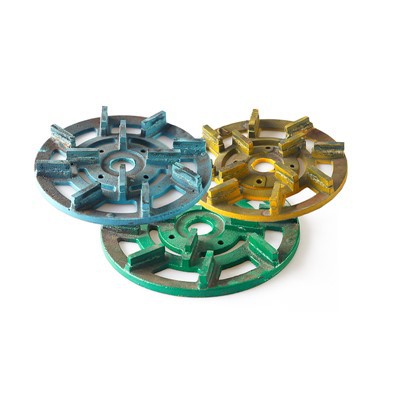
First, let’s get the basics out of the way so we’re all on the same page. Resin fickert abrasives are basically hard, block-shaped tools bonded with a resin matrix that holds abrasive grains (usually aluminum oxide or, for tougher jobs, silicon carbide) in place. They’re designed for edge grinding, surface finishing, and polishing hard surfaces like granite, marble, concrete countertops, and even terrazzo. Unlike thin, flexible diamond pads, they’re rigid—so they apply consistent pressure across a flat surface, which means fewer gaps and less chance of uneven grinding. That rigidity is a huge selling point, but it also means they’re not for every job.
Let’s start with the biggest alternative: diamond abrasives. You’ve probably seen these—they’re the go-to for high-precision work these days, right? But here’s the thing: I’ve heard way too many guys swear by diamond pads for everything, only to end up calling me frustrated because they burned a marble countertop or had to replace three pads halfway through a job. Diamond abrasives work by embedding tiny diamond crystals in a metal or resin bond, and they cut super fast. But here’s the catch: diamond is reactive with certain materials—like marble, limestone, or any stone with a high calcium content. The carbon in diamond reacts with calcium in the stone at high grinding speeds, leaving a dull, frosty finish that’s impossible to buff out without extra steps. Resin fickert abrasives? They don’t have that reactivity. Because their abrasive grains are aluminum oxide or silicon carbide, they cut through that calcium-rich stone evenly without discoloration. I’ve had fabricators tell me that for large-scale marble projects (like hotel lobbies or residential whole-house countertops), resin fickerts save them 20% on material rework alone because they don’t have to fix frost damage from diamond tools.
Another big difference is cost—up front and over time. Diamond abrasives are way more expensive per unit. A 4-inch diamond pad might run you $15, while a resin fickert block of the same size is $8. But the real kicker is wear rate. Diamond pads last longer on very hard, dense stone like granite, but on medium or soft stone, they glaze over fast. Glazing is when the abrasive crystals get worn down and flat, so instead of cutting, they just rub against the surface and generate heat. A glazing pad is useless until you spend time and effort “conditioning” it, which adds hours to a job. Resin fickert abrasives? The resin matrix wears at the same rate as the abrasive grains, so the grains stay sharp, and glazing is almost non-existent. That means less downtime switching tools, less conditioning, and lower labor costs. I did a side-by-side test last year with a crew doing concrete surface prep: they used diamond pads on half the floor, resin fickerts on the other. The diamond pads wore out after 120 square feet; the resin fickerts finished 180 square feet and still had 30% of their life left. The crew ended up paying $0.12 per square foot with resin fickerts vs. $0.21 with diamonds. For that job, that’s a difference of almost $200 saved—money that goes straight to their pockets, not the tool supplier.
Next up: silicon carbide abrasive blocks. These are the old workhorses, right? I remember my dad using them back in the 90s for grinding concrete. Silicon carbide is hard, but it’s brittle—so it breaks apart easily when you apply pressure, which leaves uneven cuts. Resin fickert abrasives? The resin bond holds the abrasive grains securely, even when you’re pushing hard on tough surfaces like thick concrete or dense granite. That brittleness issue makes silicon carbide blocks way less consistent. I’ve had contractors call me saying their silicon carbide blocks chipped halfway through a job, leaving deep gouges that required patching. Resin fickerts don’t do that—because the bond is flexible enough to absorb shock but rigid enough to maintain shape. Also, silicon carbide blocks only come in a few grit sizes, while resin fickerts are available in a full range: from coarse 30-grit for initial rough grinding up to 3000-grit for polishing. That means you can use a single type of tool for every step of the process, instead of switching between blocks for roughing and pads for finishing. No more digging through a toolbox for different grits—just grab a resin fickert and go.
Wait, let’s talk about something that’s super important for guys working on-site: dust. Most abrasive tools generate a ton of silica dust, which is a huge health hazard. Diamond pads and silicon carbide blocks create a lot of fine silica particles that are hard to contain, even with a vacuum. Resin fickert abrasives? Because the abrasive grains are bonded in a resin matrix, they produce coarser, less harmful dust that’s easier to capture with standard vacuums. I’ve had OSHA inspectors mention this to me—they love when contractors use resin fickerts because it reduces the risk of silica exposure. For small crews working in tight spaces like basement countertop installations, that’s a game-changer. No more wearing a respirator that makes you feel like you’re suffocating—just a basic dust mask works, which cuts down on fatigue and keeps you working longer.
But hold on—resin fickert abrasives aren’t perfect, and I’m not here to lie to you. There are jobs where the alternatives are way better. For example, if you’re working on extra-hard materials like engineered quartz or ultra-dense granite, diamond abrasives will outperform resin fickerts in speed. Diamond cuts so fast on those surfaces that you’ll finish the job in half the time you’d take with resin tools. Also, for very small, detailed work—like grinding tight edges around sinks or ornate carvings—thin diamond pads are more flexible and can get into those nooks better than rigid resin fickert blocks. You don’t want to use a 4×4 resin fickert on a sink edge; it’ll chip the stone. But for large, flat surfaces—floors, big countertops, wall panels—resin fickerts are unmatched. I once had a crew doing a 10,000-square-foot concrete warehouse floor: they tried diamond pads first, but the glazing was so bad they had to stop every hour to condition the pads. Switched to resin fickerts, and they finished the floor 3 hours faster. That’s 3 more hours they could take on another job, or just get home to their families earlier.
Another thing people don’t talk about: tool compatibility. Resin fickert abrasives work with most standard angle grinders, slab polishers, and floor grinders. You don’t need to buy a whole new piece of equipment to use them, unlike some specialized diamond tools that require specific machines. Silicon carbide blocks are compatible too, but as we talked about, they don’t hold up as well. The only issue with resin fickerts is that you want to make sure you’re pairing them with the right bond for your material. A soft bond works for soft stone like marble; a medium bond is for medium stone like granite; a hard bond is for concrete. Use the wrong bond, and they’ll wear too fast or not cut at all. But that’s a small learning curve, and it’s way easier than troubleshooting glazing or reactive damage with diamond tools.
Let’s wrap this up with some real, tangible scenarios. If you’re a fabricator doing 10 residential marble countertops a month: resin fickerts will save you on rework from frost damage, cut down on tool switching time, and lower your per-square-foot cost. If you’re a concrete finisher doing a 5000-square-foot garage floor: resin fickerts will reduce downtime from glazing and generate easier-to-contain dust. If you’re a mason working on a historic stone building where you can’t risk damaging the delicate stone: resin fickerts are the way to go because they’re gentle and don’t react with old, soft limestone.
Now, I know what some of you are thinking: “My buddy uses diamonds for everything, and he swears by it.” That’s fine—different jobs call for different tools. I’m not here to tell you to ditch your diamonds. But I am here to say that resin fickert abrasives are not the old-school “backup” tool they used to be. They’re a versatile, cost-effective option for 70% of the jobs we see every week. The key is matching the tool to the material, not just going with whatever your cousin swears by.
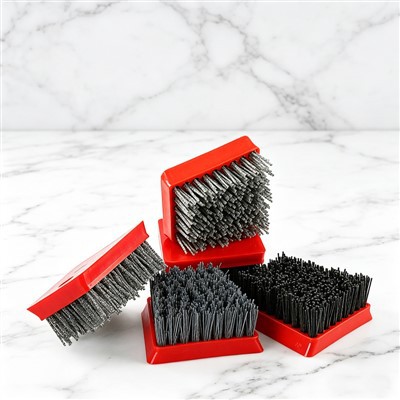
If you’re curious about testing resin fickert abrasives for your next job, or you want to compare the numbers for a specific project, reach out to me. We can send you a small sample to test on-site, no strings attached. I’ve been in this game long enough to know that the best tool isn’t the most expensive one—it’s the one that gets the job done right, on time, and without headaches. That’s what I’m here for, and that’s what our resin fickert abrasives are built to do.
Classical Disc Abrasive References:
- Stone Fabricators & Contractors Association. (2021). Abrasive Tool Selection for Natural Stone Finishing.
- Occupational Safety and Health Administration (OSHA). (2022). Silica Dust Control for Construction and Surface Preparation Workers.
- Journal of Materials Processing Technology. (2020). Performance Comparison of Resin-Bonded and Diamond Abrasives for Hard Surface Grinding.
- Concrete Construction Magazine. (2021). Cost Analysis of Surface Preparation Tools for Commercial Flooring Projects.
Quanzhou Cheefung New Materials Co., Ltd.
As one of the most experienced resin fickert abrasive enterprises in China, we are able to meet the needs of the majority of our customers. Please feel free to wholesale advanced resin fickert abrasive made in China here from our factory. For price consultation, contact us.
Address: Jinshan Community, Licheng District, Quanzhou City, Fujian, China
E-mail: info@prostonetools.com
WebSite: https://www.prostonetools.com/
