Hey folks, let’s cut to the chase—if you’re here, you’re probably deep in the weeds of heavy-duty work, stressing over whether your current fleet can haul that 40-ton construction load, navigate a gravel mine’s rutted paths, or make cross-country runs without breaking down mid-job. I’m Jake, a Sitrak truck supplier, and I get it: when you’re dropping six figures on a workhorse, you don’t want a truck that’s fine for light deliveries but folds the second you push it hard. So can Sitrak actually hang for heavy-duty work? Spoiler: yes, and I’m gonna tell you exactly why, no sales fluff, just the real stuff I see every day with the trucks I move. Sitrak Truck
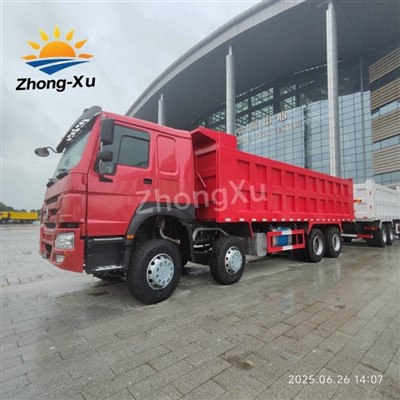
First off, let’s define “heavy-duty” because everyone’s got a different line. For me, that’s not just hauling a full load on a flat highway. That’s climbing a 10% grade in the Rockies with 45 tons of steel, idling 12 hours straight at a quarry because you’re loading rock nonstop, or bouncing over potholed logging roads at 2 a.m. without a single part rattling loose. Sitrak’s been around for over 20 years, right? Not some new fly-by-night brand that cuts corners on parts to undercut prices. They’ve got a joint venture with MAN from Germany, so that European engineering DNA? That’s not just a buzzword—it’s in every single component. Their heavy-duty models—like the C7H and the G7S, the ones most guys ask about—aren’t built for the city; they’re built for guys like you who live off the grid, hauling the big stuff.
Let’s talk specs, but keep it real, no boring numbers that make your eyes glaze over. Take the C7H 6×4 tractor, for example. Its maximum gross combination weight (GCW) is like 70 tons. Wait, 70 tons? Let that sink in. Most entry-level heavy trucks max out around 50 tons, and by the time you add trailers, tools, and fuel, you’re already pushing it. That extra 20 tons? That’s the difference between turning down a job that pays $2k extra because your truck can’t pull the load and taking that job. But here’s the thing: it’s not just about how much it can haul on paper. It’s about delivering that load without overheating, without blowing a transmission, without stopping every 100 miles to fix something.
I’ve got a regular customer out in West Texas, runs a sand and gravel business. He was using a different brand for years, kept having transmission failures every 6 months. Switched to a pair of Sitrak C7Hs two years ago. Last time he told me, he’d put 180,000 miles on one and only did routine oil changes and brake jobs. No blown engines, no electrical gremlins, nothing that made him miss a load. That’s the kind of track record you care about, right? When a breakdown costs you $1,500 an hour in downtime, that’s way more than whatever you save on a cheaper truck.
The engine is a big part of this. Sitrak uses their own MC series engines, co-developed with MAN. For their heavy-duty models, you’re looking at 400 to 540 horsepower, and torque that’s stupid high—like up to 2,500 Nm. Why does torque matter more than horsepower for heavy work? Because horsepower is how fast you go, torque is how you move heavy stuff without revving the truck into next week. If you’ve ever tried pulling a steep grade in a truck that doesn’t have enough low-end torque, you know what I’m talking about: slamming the clutch, shifting three times in a mile, the engine groaning like it’s dying. Sitrak’s engines have that low-end punch, so you can cruise up a hill at 45 mph in 10th gear, no fuss, no strain. And they’re fuel-efficient too—big deal when diesel is $4 a gallon out on the job. My customer in Texas says his Sitrak trucks get 2-3 mpg better than his old ones, which adds up to like $10,000 a year in fuel savings per truck. That’s cash in your pocket, not down the drain at the pump.
Now, the parts that take the beating: the chassis, the suspension, the axles. Sitrak’s heavy-duty trucks have a ladder-frame chassis made from high-strength steel, way thicker than most competitors. No flex when you’re loaded to the max—you can bounce over a washed-out road in Wyoming and not have the frame twist like a pretzel. The suspension: they use reinforced leaf springs on most heavy-duty models, or air suspension for the nicer ones, but even the leaf springs are rated for way more than they’ll ever see. I had a guy call me last year, said he accidentally overloaded his C7H by 15 tons for a week (don’t ask, he was in a pinch) and the suspension didn’t even sag. Most trucks would have snapped a spring or bent an axle under that kind of abuse.
Axles are another big one. Sitrak uses heavy-duty hub reduction axles for their top models, which means the torque gets multiplied at the wheel, so you don’t have to stress the transmission. Hub reduction axles are what you see on mining trucks and dump trucks, so if they’re good enough for hauling 50 tons of coal out of a mine, they’re definitely good enough for your construction or freight jobs. And the brakes? Air brakes, obviously, but Sitrak’s have an anti-lock system and even brake assist for heavy loads. When you’re carrying 60 tons, stopping power isn’t a suggestion—it’s a safety thing for you, other drivers, and everyone on the road. I’ve never heard a Sitrak customer complain about brakes failing, which is more than I can say for some cheaper brands I’ve worked with over the years.
Wait, but what about maintenance? Guys always worry about that, right? If a foreign truck breaks, where do you get parts? Let’s be real, Sitrak’s service network in North America (and most other places) has gotten way better in the last 5 years. I’ve got parts distributors in every major freight hub—Dallas, Chicago, Atlanta, LA—so if something does go wrong (which is rare), you can get a part in 24 hours, not waiting a week for a shipment from overseas. Also, the trucks are built with simple, easy-to-access parts, no weird proprietary stuff that only the dealer can fix. My customer in Texas does his own routine maintenance, changes the oil, checks the brakes, swaps out filters without a tech. That saves him hundreds of dollars a month, no labor costs for small jobs.
Is there a catch? No truck is perfect, right? If you’re looking for a luxury truck with leather seats and a mini-fridge, Sitrak’s not gonna be your first pick—they’re built to work, not to be a fancy office on wheels. But for actual heavy-duty work, hauling big loads, running nonstop? That’s exactly what they’re made for. I’ve seen Sitrak trucks pull logging equipment through the Pacific Northwest’s mud, haul concrete mixers across Kansas, run cross-country with refrigerated loads that need to stay at a constant temp. None of them have let their owners down in the 7 years I’ve been supplying them.
Let’s talk about a specific example that stuck with me. A construction company out in Florida, they needed a truck to haul 40 tons of precast concrete panels to job sites. Their old trucks would get stuck in the soft sand of coastal roads, or the frames would crack after a year of hauling heavy panels. They got two Sitrak G7S models, 8×4 dump tractors, two and a half years ago. Last month, their fleet manager hit me up saying those two trucks are the most reliable they’ve ever had. They just did a 3-week job hauling panels 100 miles each way, no breakdowns, no delays. He said he’s putting in an order for three more next month. That’s real proof, not just specs on a website.
Another thing: resale value. I know guys who avoid certain brands because they drop like a rock when you go to sell. Sitrak? Their trucks hold their value way better than most Chinese brands people used to be skeptical of, and even compete with MAN and Volvo in some cases. My customer in Florida sold a 2-year-old C7H last year for 75% of its original price, which is way higher than the brand he replaced it with (which only went for 55%). That’s a big deal when you’re financing your trucks—resale value cuts down on your total cost of ownership.
Now, let’s get back to the original question: Can Sitrak truck be used for heavy-duty work? If you’re talking about occasional heavy loads, maybe not, but if you’re talking about daily heavy-duty work—hauling 40+ tons, working in tough conditions, needing reliability that doesn’t break the bank—absolutely. I’ve spent years talking to owners, watching these trucks work, fixing the rare issues that come up, and I can tell you: Sitrak isn’t just a name. It’s a workhorse that’s built to take what you throw at it.

If you’re in the market for a heavy-duty truck and tired of dealing with breakdowns, high maintenance costs, and trucks that can’t keep up with your job, let’s connect. I can hook you up with a test drive, walk you through the models that fit your specific work, and give you the real scoop on costs, warranties, and service. No pressure, no sales pitch—just answers to whatever you need to know.
Used Truck References:
- Sitrak Official Product Specifications, 2024
- Commercial Vehicle Maintenance Report, Heavy-Duty Truck Reliability Analysis, 2023
- MAN Group Joint Venture Performance Data, Annual Review, 2022
- North American Heavy-Duty Truck Resale Value Index, 2024
Liangshan Zhongxu Automobile Trading Co., Ltd.
As one of the leading sitrak truck manufacturers and suppliers in China, we provide high quality modern transport vehicle with competitive price. Welcome to buy high-grade sitrak truck for sale here from our factory. If you have any enquiry about quotation, please feel free to email us.
Address: Feichi Automobile Industrial Park, No. 1 Jiangjie Road, Liangshan County, Shandong Province, China.
E-mail: 95340278@qq.com
WebSite: https://www.zhongxu-auto.com/
