If you’ve ever stopped by our manufacturing floor on a quiet weekday afternoon, you might spot Jake—our lead service technician, the guy who’s been troubleshooting, training, and tweaking feed mixers for 12 years now—sitting at a small metal desk flipping through a dog-eared notebook. It’s not a sketchy manual or a repair guide: it’s a collection of handwritten notes from dozens of farmers he’s trained over the years, every entry a story of surprise, frustration, or “Wait, this is way simpler than I thought.” Most of those entries start the same way: “I thought these mixers were going to be way too complicated.” And that’s exactly the question we get a dozen times a week, from small hobby farms with 50 head of cattle to large commercial operations managing 10,000+ poultry birds: Are feed mixers easy to operate? Feed Mixers

The short answer is yes—but with a few fine prints that matter, especially if you’ve never used heavy agricultural equipment before. Let’s break this down, because it’s not a one-size-fits-all claim, and as a supplier, we don’t sell you a machine and ghost you. We stay with you through setup, training, and the first month of use to make sure it clicks.
First, let’s clear up the biggest myth that makes people think feed mixers are hard: the idea that all mixers are the same. That’s not true. Ten years ago, when I first started in this industry, most feed mixers were big, clunky, manual-operated beasts that required two people to load, crank levers for 45 minutes, and cross your fingers that the mix was even. Those days are largely gone, and modern feed mixers—whether we’re talking vertical mixers for small cattle operations, horizontal mixers for poultry, or even portable models for hobby farms—are built with operator-friendliness as a core feature, not an afterthought.
Take our standard line of vertical mixers, for example, the workhorse we sell to most mid-sized farms. The control panel is not a dense grid of buttons with tiny labels that require a degree in ag engineering to decode. It’s four big, color-coded buttons: one to start the mixing cycle, one to pause it, one to discharge the feed, and an emergency stop that’s bright red and mounted where it’s impossible to miss. That’s it. No complex programming unless you want it—we add optional digital timers for larger operations that want to pre-set cycle lengths, but you can run the mixer perfectly well without touching those. The mixing cycle itself? For a standard batch, it’s 8 to 12 minutes. No counting on a stopwatch, no adjusting dials mid-cycle. The machine does the work, as long as you load it correctly.
Which brings us to the first real skill any operator needs: learning how to load ingredients properly. This is where most new operators get tripped up, not because the machine is hard, but because loading wrong leads to uneven feed, longer cycles, or even wear on the mixer. Let’s be clear: this isn’t rocket science. Our training guides walk you through a simple rule: load dry, bulky ingredients first (hay, corn stalks, straw), then denser feeds like grains, then liquid additives (molasses, mineral supplements, liquid vitamins) last. Why? The heavy stuff sinks and the light stuff floats if you load liquids first, and you end up with a sticky clump at the bottom that takes twice as long to mix. We give every new customer a cheat sheet to tape to their mixer, and our service team will walk you through your first three loads in person if you’re local, or hop on a video call if you’re further away. I’ve seen a 16-year-old kid running his family’s 80-head cow farm nail this on his third try, and a retired rancher with 40 years of experience take a little longer because he was used to his old manual mixer that had different rules. The learning curve here is short—usually less than an hour of hands-on practice.
Now, what about different types of operations? A common question from small hobby farmers is: What if I have only 10 goats or 20 chickens? Are small mixers easy? Let’s talk about our portable batch mixers, the ones we build for these smaller setups. These are even simpler. They mount to the back of a pickup or a utility trailer, have a manual crank option if the power goes out, and a tiny control panel that fits in the palm of your hand. One farmer in Ohio, who raises 30 sheep, told me last year that he learned to operate his in 15 minutes. “I was worried I’d break it because I’m not very tech-savvy,” he said, “but it’s like using a big KitchenAid, just for feed instead of cookie dough.” That’s a perfect analogy, actually. For small, batch-based operations, the mixer’s design is intuitive—no heavy lifting, no complicated steps. You dump in your pre-measured ingredients, hit start, and come back when it beeps.
But here’s the part that most suppliers won’t tell you: ease of operation also depends on how much support you get. A lot of big-box equipment companies sell feed mixers, leave you with a 100-page manual you’ll never read, and charge you $150 an hour if you call with a question. That’s not how we do business. When you buy a mixer from us, setup is free. We come to your farm, unbox it, level it (a critical step that a lot of new operators skip, by the way—an unlevel mixer won’t mix evenly, and we’ll show you how to fix that in 10 minutes), connect it to power, and run three test batches with you. We also provide a 24/7 support line for the first year, so if you’re in the middle of loading a batch at 6 a.m. before milking and you hit a small snag, you don’t have to wait for business hours to get help. Most of the time, the issue is something simple—like a feed chute that’s slightly clogged, or an ingredient that’s too coarse, and we can walk you through it over the phone in two minutes.
That said, there are a few cases where operating a feed mixer requires a little more than common sense, and it’s important to be honest about that. If you’re running a large commercial feed operation—say, 50,000 poultry birds or a feed mill that supplies multiple local farms—you’ll likely want a mixer with more advanced features, like batch weighing, recipe storage, and integration with your farm management software. These mixers are still not hard to operate, but they do require a little basic training on the digital controls and recipe settings. We offer dedicated training sessions for commercial operators, either on-site at your farm or at our headquarters, and many of our commercial clients send one or two people for training, then that person trains the rest of the team. It’s not complicated, but it’s a little more involved than operating a small hobby mixer.
Another point that’s often overlooked: maintenance. A well-maintained feed mixer is way easier to operate than a neglected one. You don’t need to be a mechanic to do the basic maintenance, though. Once a week, you clean the mixing chamber—usually just hosing it out, and we include a brush with every mixer purchase. Every three months, you check the augers or mixing blades to make sure they’re not worn down, and every year, you get a technician to come do a full inspection. This takes less than an hour a week, and it’s what keeps your mixer running smoothly, so you don’t end up with a jammed chamber mid-batch that takes hours to fix. I’ve had customers tell me they thought their mixer was broken for days, only to realize they forgot to clean the chamber after a batch of feed with extra molasses, which dried and clogged the chute. A 5-minute clean would have fixed the issue, but they didn’t know that’s part of the regular operation.
Let’s also talk about common mistakes new operators make, because these are avoidable, and they’re the reason some people think feed mixers are hard. The biggest mistake is overloading the mixer. Every model has a maximum load capacity, and putting more ingredients in than it’s designed for not only makes mixing uneven, but it can strain the motor or jam the chamber. The good news is, we clearly label the maximum line on every mixer, and we’ll show you how to measure your batch to stay within that limit. The second mistake is not calibrating the mixer’s weight system if it has one. For mixers with digital scales, calibrating is a simple process—usually just placing a known weight on the scale and pressing a button, and we walk you through that during setup. A lot of new operators skip this step, leading to over or under-measuring supplements, but it takes 2 minutes to do once a month.
I bring up all this because when we started this company 18 years ago, our mission wasn’t just to sell feed mixers—it was to make a piece of equipment that works for farmers, not against them. Back then, we heard too many stories of farmers who bought a fancy new mixer, spent weeks trying to figure it out, and ended up going back to their old, clunky manual mixers because they thought the new ones were too hard. That’s why we designed our mixers to be intuitive, with simple controls, clear instructions, and support that doesn’t disappear after you sign the paperwork.
So, to circle back to the original question: Are feed mixers easy to operate? For the vast majority of farmers—small hobby farms, mid-sized cattle or poultry operations, even small commercial setups—yes, they are. The learning curve is small, the controls are simple, and modern models are built to be operator-friendly. The only time it gets a little more involved is if you’re running a large commercial operation with advanced features, and even then, the training is straightforward.
If you’re in the market for a feed mixer and still have questions, our team is here to help. We can walk you through the different models, answer any questions you have about operation, and connect you with current customers who can tell you firsthand how easy their mixers are to run. Don’t let the fear of complicated equipment stop you from upgrading your operation—modern feed mixers are built to make your job easier, not harder.
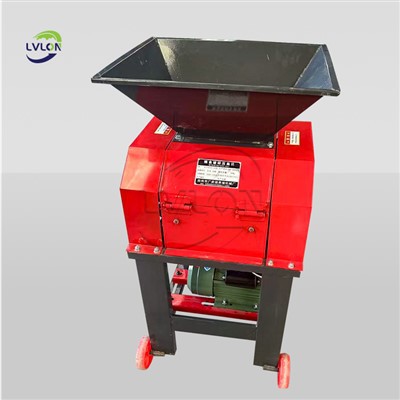
If you’d like to learn more about our line of feed mixers, discuss the best model for your operation, or arrange a demonstration, our team is ready to assist.
Feeding Equipment References
- American Society of Agricultural and Biological Engineers. (2021). Operator Safety and Ease of Use for Agricultural Mixing Equipment. ASABE Standard EP390.
- National Agricultural Statistics Service. (2022). Small Farm Equipment Adoption and Operator Training Trends. USDA Report.
- Feed Industry Association. (2023). Evaluation of Modern Feed Mixer Design for Small to Mid-Sized Operations. FIA Technical Bulletin.
Henan Lvlon Industrial Co., Ltd.
Address: Unit 5, 5th Floor, Building 11, No. 18 Dongfeng Road, Jinshui District, Zhengzhou City, Henan Province.
E-mail: lvlonxu@gmail.com
WebSite: https://www.lvlonmachinery.com/
