If you’ve ever stepped into a warehouse on a sweltering summer afternoon or walked into a cold storage unit in the dead of winter, you know how big a difference consistent, effective insulation makes. As someone who’s spent the last decade supplying EPS sandwich panels to construction teams, warehouse operators, and industrial builders across the region, I’ve seen firsthand that even the highest-quality panels won’t deliver if their insulation efficiency is underperforming. Too often, builders focus on upfront costs and miss small, critical tweaks that turn a good panel into an energy-saving workhorse—and that’s what I want to break down today. EPS Sandwich Panels
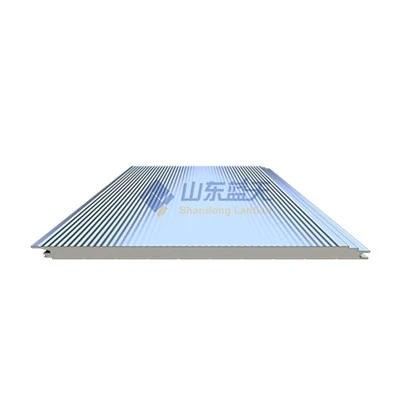
First, let’s get clear on what EPS sandwich panels are, for anyone new here. They’re rigid, three-layer structures: a core of expanded polystyrene (that’s EPS foam, the same stuff used in disposable coffee cups and packaging that keeps your phone safe during shipping) sandwiched between two thin, durable outer skins—usually steel, aluminum, or sometimes composite materials. The magic of these panels is their closed-cell EPS core, which traps air pockets that slow heat transfer way better than solid materials do. But insulation efficiency isn’t just about the EPS itself; it’s about how the whole panel system works together, from manufacturing to installation to regular upkeep.
The first, most impactful way to boost insulation efficiency starts long before a panel even arrives on a job site: optimizing the EPS core during production. Not all EPS is created equal, and that’s a mistake I see a lot of newer suppliers (and even some old hands) make. EPS density, for example, directly correlates to R-value— that’s the measure of thermal resistance, the higher the R-value, the better the insulation. Most standard construction EPS falls between 1 and 2 pounds per cubic foot (pcf), but cranking that to 2.2 to 2.5 pcf can increase R-value by 10 to 15 percent without adding much extra weight or cost. Wait, you might be thinking, wouldn’t that make the panel too heavy? For most applications—wall panels, roof panels for low-rise industrial buildings, cold storage walls—it’s negligible. The thicker the panel, the more noticeable the R-value gain, but even 4-inch panels at 2.5 pcf outperform thicker, lower-density panels because the air pockets are smaller and more uniform, so there’s less air leakage through the core.
Another production tweak I swear by is adjusting the EPS bead expansion and aging process. When EPS beads are manufactured, they’re small polystyrene beads that get expanded with pentane gas during production. The key here is making sure the beads expand consistently, not unevenly. If some beads expand too much and some too little, the final core will have gaps and voids where heat can seep through. That’s why we use a two-step expansion process at our facility: first, we pre-expand the beads to 60 percent of their final size, then we let them age for 12 to 24 hours to release excess pentane and stabilize their size, then we expand them again to get a uniform bead diameter. This results in a core where the beads are tightly packed with no gaps, which eliminates air movement inside the core—air movement is the enemy of insulation, right? Even tiny gaps let convection currents form, carrying heat straight through the panel. We also use a post-expansion drying step to prevent moisture absorption. EPS is hydrophobic, but if beads are not fully dried after expansion, they can hold small amounts of water, which lowers R-value by up to 20 percent because water conducts heat much better than air. That’s a simple step but one that saves our clients thousands in energy bills over the life of the building.
Next, the outer skins matter more than most people realize, especially when it comes to insulation efficiency. You might think the skin is just there to protect the EPS core from dents and weather, but it also acts as a thermal bridge if it’s not properly bonded. A thermal bridge is a point where heat transfers through the solid outer skin instead of the insulating core, because metal is a great conductor of heat. So, the bond between the skin and the EPS core has to be perfect. If there are gaps between the skin and the foam, or if the adhesive is applied unevenly, heat can leak through those tiny spaces. We use a low-outgassing, moisture-cured polyurethane adhesive that’s applied in a continuous, 2-millimeter bead along the full length of the skin, not just spot-bonded. Spot-bonding is cheaper, but it creates multiple thermal bridges at the adhesive points, and gaps form over time as the adhesive shrinks or moves with temperature changes. We also test every batch of panels for peel strength: our panels have a peel strength of over 10 Newtons per millimeter, which means the skin will never separate from the core, even in extreme temperature swings. That constant, full bond keeps thermal bridging to a minimum.
Another skin-related tip: choose the right skin material and thickness for your climate. In cold climates, where you’re trying to keep heat inside, a thicker skin (0.5 mm vs. 0.4 mm) creates a slightly better thermal break? Wait, no, actually—wait, metal skins are the main thermal bridge, but a common mistake is using too thin a skin that dents easily, which creates tiny gaps between the skin and the core after installation. Dents mean the skin pulls away from the foam, creating an air gap that lets heat escape. We recommend a minimum 0.4 mm galvanized steel skin for most applications, and 0.5 mm for areas with high wind or hail. For hot climates, aluminum skins are slightly better because they reflect more solar radiation than steel, which reduces heat gain on the outer surface of the panel by up to 8 percent. That might sound small, but when you’re running a 100,000 square foot warehouse, 8 percent less heat coming through the walls and roof adds up to hundreds of dollars a month in air conditioning costs.
Now, even the best-designed panels will underperform if installed wrong, and that’s the biggest mistake I see builders make. Insulation efficiency is 50% the panel itself and 50% the installation, period. Let’s start with panel joints. When you install EPS sandwich panels, the edges have male and female grooves that fit together, right? The wrong seal here is a major source of air leakage. Too many installers use just a thin bead of silicone caulk, which dries out and cracks within a few years. We supply our clients with a closed-cell polyurethane foam sealant that’s specifically formulated for panel joints—it expands slightly to fill gaps up to 10 millimeters, cures to a flexible, watertight, airtight seal, and won’t shrink or crack in temperatures from -40°F to 180°F. Another big installation mistake is leaving gaps around penetrations: pipes, electrical conduits, vents that go through the panels. If you just stuff fiberglass around the pipe, that’s a huge thermal bridge. We recommend using spray foam insulation rated for high temperatures to seal around penetrations, and then covering the edge with metal flashing to protect the seal from water. Water is the silent killer of insulation efficiency—even a small leak in a panel joint can let water seep into the EPS core, reducing R-value by half in as little as six months. I once had a client who skipped proper joint sealing for a cold storage warehouse, and after two years, their energy bills went up 30%—turns out, half the EPS core in some panels was waterlogged from winter snow seeping through cracked caulk. That’s a avoidable cost.
Ventilation is another installation point that’s often overlooked. For roof panels, in particular, you need to create an air gap between the panel and the roof substrate, right? That gap allows hot air to escape from under the roof panel, which reduces the amount of heat transferred into the building. A common mistake is installing panels directly on the substrate with no gap, which traps hot air and makes the panel work harder. We recommend a 2-inch ventilation gap for all roof applications, and installing ridge vents and eave vents to allow cross-ventilation. For wall panels, ventilation isn’t as critical, but leaving a small gap at the base of the wall allows any moisture that gets trapped to escape, preventing mold and rot in the EPS core.
Regular maintenance is the final piece of the puzzle, and it’s something that even small businesses skip because they don’t think about their insulation until they get a sky-high energy bill. What kind of maintenance? First, inspecting panel joints twice a year—spring before summer heat hits, and fall before winter cold sets in. Look for cracks in sealant, dents in skins that could create gaps, and signs of water staining on the panels, which indicate a leak. Second, clearing debris from roof panels and ventilation gaps—leaves, dirt, snow can block airflow, especially on roofs, which reduces the ventilation gap’s effectiveness. Third, checking for pest damage. Wait, can pests damage EPS? Yes, rodents like mice and rats can chew through the foam core, creating gaps that let heat transfer. We treat all our EPS cores with a borate-based pest repellent that’s non-toxic, so it doesn’t harm the environment or building occupants, but it prevents rodents and insects from chewing through the core. Even so, a rodent infestation can create holes that ruin insulation efficiency, so regular inspections for signs of pest activity are key.
Let me wrap this up by saying that improving EPS sandwich panel insulation efficiency doesn’t have to mean buying expensive, specialized panels. It’s about getting the basics right: producing consistent, high-density EPS cores with no gaps, bonding the skins properly to minimize thermal bridging, installing panels correctly with airtight joints and proper ventilation, and doing simple maintenance to catch small issues before they become big problems. As someone who’s been in this industry for years, I’ve seen clients cut corners on each of these steps and end up paying thousands extra in energy bills, and I’ve seen clients take the time to get these details right and save that money instead.
If you’re working on a new project, or looking to upgrade the insulation of an existing building, I’d be happy to walk you through the right EPS sandwich panel solutions for your needs. Every project is different—whether it’s a cold storage facility in a northern climate, a warehouse in the desert, or a commercial office building—and the tips that work best will depend on your specific space, location, and budget. Reach out to discuss your project, and I can share more details on the panel specifications, installation best practices, and maintenance routines that will help you get the most insulation efficiency from your EPS sandwich panels.
Glass Wool Sandwich Panel References
- ASTM International. Standard Test Method for Thermal Transmission Properties of Insulating Materials by Guarded Hot Box. 2021.
- Building Science Corporation. Thermal Bridging in Wall Assemblies. 2019.
- National Insulation Association. Guide to EPS Insulation for Commercial and Industrial Applications. 2020.
- Journal of Building Physics. “Moisture Effects on the Thermal Resistance of Expanded Polystyrene Insulation.” Vol. 43, No. 3, 2020.
Shandong Lantian New Material Technology Co., Ltd.
Shandong Lantian New Material Technology Co., Ltd. is one of the most reliable manufacturers and suppliers of eps sandwich panels in China, featured by quality products and low price. Please rest assured to buy bulk eps sandwich panels for sale here from our factory. Contact us for pricelist and customized service.
Address: North End of Wanshida Road, Dianzi Town Industrial Park, Boxing County, Binzhou City, Shandong Province
E-mail: Lantian023@ltaaaaa.com
WebSite: https://www.ltpirpanels.com/
