If you’ve ever wandered past a boutique display of lit candles, you’ve probably paused to take a deep breath—only to wonder, “Wait, that doesn’t smell like the wax I tested unlit at the store.” As a scented candle supplier, this is one of the most common questions I get from customers, and it’s also one of the most fascinating parts of my job, blending chemistry, craftsmanship, and a little bit of sensory science. Let’s break it down in plain, practical terms, no stuffy textbooks required. Scented Candle

First, let’s get one thing straight: the scent you smell when a candle is sitting on your shelf, unlit, is not the same as when it’s burning. And it’s not your imagination—there are specific, measurable reasons for this difference. Let’s start with how scented candles are made, because that’s the foundation of why this happens. When we (as a candle supplier) develop a new fragrance, we don’t just pour fragrance oil into wax. We have to balance three key components: the wax, the wick, and the fragrance load. The unlit scent is what you get when the fragrance oil is sitting suspended in the solid wax, at room temperature. That scent is designed to be subtle, pleasant at close range, and not overpowering when you’re just browsing a display. But when you light the wick, everything changes. Heat becomes the catalyst that unlocks the scent in a totally different way.
Let’s talk about that heat. A candle flame burns at roughly 1,000 to 1,400 degrees Fahrenheit, which is hot enough to melt the surrounding wax into a liquid pool (that’s the wax pool you see in the center of a burning candle). As the wax melts, the fragrance oil trapped in it volatilizes—meaning it turns from a liquid or solid into a gas. That gas is what travels through the air to reach your nose. But here’s the thing: not all fragrance molecules volatilize at the same temperature. Some are light, tiny molecules that evaporate easily even at lower heat; these are usually the top notes of a fragrance. Others are larger, heavier molecules that need higher temperatures to turn into gas—those are the base notes. When a candle burns, the flame’s heat doesn’t just melt wax; it separates these notes and releases them in a specific order, which is why the burning scent is more layered and complex than the unlit one. For example, a candle with a lavender-vanilla blend might smell like soft, herbal lavender when unlit, but when burning, the warm flame amplifies the vanilla base note to feel cozy and balanced, with the lavender peeking through as a subtle background undertone. That’s a intentional choice we make when formulating—we don’t just mix scents; we make sure they play well with the heat of the flame.
Another big factor is the wax itself. Not all waxes are created equal when it comes to scent release. Most suppliers, including us, use a blend of paraffin and soy wax for our candles, because paraffin holds fragrance well and soy wax burns cleanly. But different waxes have different molecular structures that affect how fragrance is released when heated. For example, soy wax has larger molecules than paraffin, so it takes a little longer to release fragrance when heated—meaning the burning scent might develop more slowly, with deeper, richer notes coming through after the candle has been burning for 15 to 20 minutes. Paraffin wax, on the other hand, releases scent faster, so the burning scent is more immediate, but can sometimes feel more sharp or overwhelming if the fragrance load is too high. That’s why we test every candle in our lab for burn time and scent throw (that’s the term for how far the scent travels in a room) to make sure the burning scent is consistent and pleasant, not too strong or too weak.
Then there’s the wick. It might seem like a tiny, unimportant part, but the wick is the heart of a candle’s burning performance. A wick that’s too small won’t melt enough wax, so it won’t volatilize enough fragrance oil, leading to a weak burning scent. A wick that’s too big will burn too hot, which can break down fragrance molecules or even cause the candle to smoke, which ruins the scent. For example, if a wick is too large for a candle with a heavy floral fragrance, the heat will burn the delicate floral molecules, turning them into something acrid or unpleasant, instead of the soft, sweet scent you expected. That’s why we test wick sizes for every single candle scent we make—we adjust the wick length and thickness to match the wax and fragrance, so the burning heat is just right to release the scent properly, without damaging the molecules.
Now, let’s address a common myth: some people think the difference between unlit and burning scent is because of “fake” fragrance in candles, but that’s not true. Even candles with all-natural, high-quality fragrance oils will have a different smell when burning, because the heat is changing how the molecules behave. That said, lower-quality candles (like those with cheap fragrance oils or incorrect wicks) can have a much more noticeable difference, and not in a good way. A cheap candle might smell strong and chemical-y when unlit, then smell like nothing when burning, or even smell acrid and toxic when lit. That’s because the fragrance oil is made of cheap, volatile molecules that evaporate easily at room temperature, so they’re all gone before the candle even starts burning. When the flame does heat the wax, there’s not much good fragrance left, and the only thing you smell is the wax or the wick burning. That’s why as a candle supplier, we prioritize high-quality, GMP-certified fragrance oils that are designed to hold up to heat—so the unlit scent is nice, and the burning scent is even better.
Another point that’s often overlooked is how our sense of smell works. When a candle is unlit, you’re smelling the scent at close range, from molecules that are just sitting in the air around the wax. When it’s burning, the heat pushes the scent molecules further, so you smell it from across a room, and your nose is processing a larger volume of molecules. That’s why a burning candle’s scent feels more present than an unlit one—your brain is picking up more molecules, and they’re mixing with the air in the room, so the overall experience is different. For example, a citrus candle that smells like fresh lemon when unlit might, when burning, have a warm, zesty scent that fills the living room, because the heat is carrying the citrus molecules across the space, and mixing with the air to create a softer, more rounded version of the unlit scent.
Let’s also talk about what happens if your candle smells the same when lit and unlit. Is that a bad thing? Not necessarily, but it’s usually a sign of a well-balanced candle. For example, a candle with a very strong, woody fragrance (like cedar or sandalwood) might have a burning scent that’s similar to the unlit one, because the base notes are so strong that they don’t change much when heated. But even then, the burning scent is usually warmer, because the heat amplifies the woody notes, making them feel more cozy and inviting than the cool, solid scent of the unlit wax. That’s a good balance—you get a scent you love when browsing, and the same scent, but enhanced, when you light it.
As a supplier, I’ve seen customers make the mistake of buying candles based solely on their unlit scent, only to be disappointed when they burn them. That’s why we always recommend asking for a sample burn test when you’re considering purchasing candles in bulk—light a small sample, and see how the scent changes as it burns. Does it stay consistent? Does it get stronger and more layered? Does it smell like you expected? That’s the best way to make sure you’re getting a candle that performs well, both on the shelf and when lit.
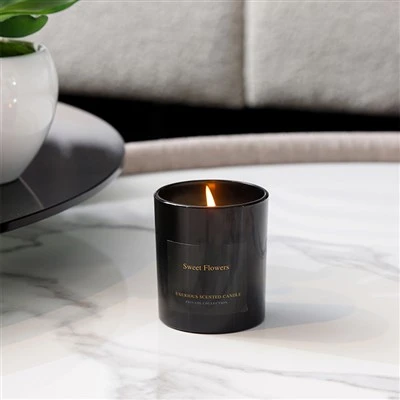
Now, if you’re reading this and you’re interested in stocking high-quality scented candles for your business, you know how important it is to offer products that perform consistently. Our candles are formulated with heat-stable fragrance oils, precision-matched wicks, and a wax blend designed for optimal scent throw. We test every batch for burn time, scent consistency, and safety, so you can be confident that the candles you sell will deliver a great experience to your customers—both when unlit and when burning.
Scent Diffuser Machine If you’re a retailer, hotel, spa, or other business looking to partner with a reliable scented candle supplier, we’d love to discuss how our products can fit your needs. Whether you’re looking for custom scents, bulk orders, or consistent, high-performing candles for your space, we have the expertise and experience to work with you to create a solution that’s perfect for your business. We pride ourselves on transparency, so if you have questions about our formulation process, wax blends, or wick testing, don’t hesitate to reach out.
References
- Lawless, H. J. (2013). The human sense of smell. Annual Review of Psychology, 64, 105-129.
- Pillonel, L., et al. (2006). Scent release from candles: Effect of wax type, fragrance concentration, and wick size on odor intensity. Journal of Sensory Studies, 21(3), 287-302.
- Perugini, J. B., et al. (2018). Thermal behavior of fragrance oils in candle wax matrices. Journal of Applied Polymer Science, 135(24), 46321.
- ASTM International. (2020). Standard test method for burning characteristics of scented candles. ASTM Standard D6557-20.
Hangzhou Felshare Biotechnology Co., Ltd.
Hangzhou Felshare Biotechnology Co., Ltd. is one of the most professional scented candle manufacturers and suppliers in China, also supports customized service. Welcome to buy bulk CE approved scented candle made in China here from our factory. If you have any enquiry about pricelist, please feel free to email us.
Address: 3/F Building 4, No.1672 Nanhuan Road, Binjiang District, Hangzhou, Zhejiang, China
E-mail: sales08@felshare.com
WebSite: https://www.xfelshare.com/
