Hey everyone, if you’re in the market for a hot pressing machine, you probably know it’s not a one-size-fits-all deal. I’m on the ground as a hot pressing machine supplier, talking to clients all week who come in saying “just give me a hot press” – and that’s where things go sideways. Last month, a small furniture shop bought a cheap press for veneering, but it had too little pressure, so their panels kept bubbling. A toy manufacturer dropped a big chunk on a industrial press that was way too big for their small plastic parts, wasting energy and time. So let’s cut through the noise: here’s how to pick the right one for your specific industry, no fluff, no wasted cash. Hot Pressing Machine
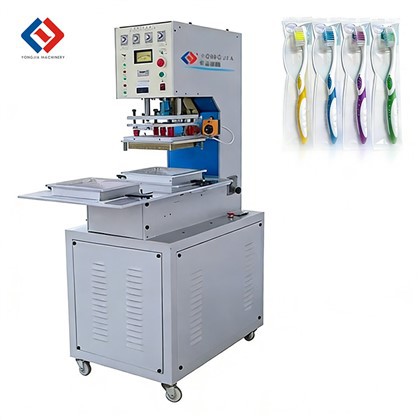
First off, you’ve gotta nail down your core use case before even scrolling through specs. I see this mistake all the time. If you’re in furniture (think laminating veneer, pressing particleboard edges), your needs are totally different from someone in automotive composite parts or even apparel (like hot press transfers for t-shirts). Let’s break it down by industry quick, because that’s how you’ll start narrowing it. For woodworking: you’re dealing with larger, flatter panels, so size matters more than super high pressure sometimes? Wait no, not exactly – veneer needs consistent, even pressure, but particleboard edge pressing needs precision on narrow strips. For automotive: carbon fiber composites? That needs way higher pressure (like 100+ psi) and often heated platens that can hold steady temps for 30+ minute cycles. For apparel or small crafts (like custom patches)? You don’t need a 4×8 platen; a 12×12 or 16×20 is enough, and you might even want a manual or semi-automatic one, not full industrial. And let’s not forget things like rubber molding – that needs specific mold compatibility, not just a flat platen. The key here is: don’t let a sales rep push a machine that works for their biggest client, ask what your specific parts are, not just “what industry are you in.”
Next, let’s talk about the non-negotiable specs that tie directly to your industry, no vague jargon. First: platen size. If your parts are 2ft x 4ft, a 3ft x 6ft platen is too big (you’re wasting pressure on empty space) and too small (you can’t fit a full panel). Wait, but also – do you need multiple platens for batch work? Some wood shops love double-deck presses so they can load one while the other presses, cutting cycle time in half. Second: pressure. This is make or break. For example, our craft clients for t-shirt transfers usually need 15-30 psi, because too high and you’ll burn the fabric or warp the shirt. But for carbon fiber parts? You need 80-150 psi minimum. Last quarter, a drone parts maker came to me because their old press only did 40 psi, so their carbon fiber frames had weak spots that cracked mid-flight. We swapped them to a 120 psi semi-automatic, and they saw a 20% drop in defect rates right away. Third: temperature control. Some industries need consistent temps for hours on end – like epoxy composites, where temp fluctuations even 5 degrees can make the part delaminate. For vinyl wrapping or small crafts, you don’t need ultra-precise temp, just something that holds steady for a few minutes. Also, check if the platens heat evenly – a lot of cheap presses have hot spots, which ruin parts. I’ve had a client in sign making say half their vinyl was peeling because one platen side was 10 degrees cooler. Save yourself that headache.
Then, let’s talk about automation level – this is where people overspend all the time. Do you really need a fully automatic press with robot loading? Probably not, unless you’re running 24/7, 10,000+ parts a day. For a small cabinet shop or a one-person embroidery business, a manual or semi-automatic press is totally fine – it’s cheaper, easier to fix if something breaks, and you don’t have to train staff on a bunch of tech. On the flip side, if you’re in automotive with a high-volume line, a fully automatic press will save you so much time on labor and speed up production. Last year, a big automotive tier 1 supplier switched from semi-automatic to automatic presses and cut their cycle time per part from 10 minutes to 3, which doubled their output without hiring new workers. Don’t get swayed by the “cool factor” of automation – ask yourself: do I have the volume to justify it? If not, you’re just paying for features you won’t use.
Another big thing: material compatibility. This is something a lot of new clients overlook. If you’re pressing porous materials like wood or fabric, you might need a platen with a release coating (like Teflon) so parts don’t stick. If you’re working with hard materials like metal or carbon fiber, you need heavy-duty steel platens that won’t warp under pressure. And if you’re using molds (like for rubber parts or custom plastic shapes), you need a press that can accommodate interchangeable molds – some small presses only have flat platens, so they can’t handle molds at all. I had a client in rubber keychain manufacturing try to use their flat veneer press for custom molds, and it bent the platens in a week – that’s a $2k mistake right there. Always mention if you’re using molds or sticking parts to platens – not all presses are built for that.
Now, let’s touch on budget, but not the “just pick the cheapest” kind. I see clients go for a $5k press instead of a $7k one, but the $5k one needs replacement parts every 6 months, so after a year, they’ve spent the same as the $7k one plus labor. Also, think about long-term costs: energy efficiency. Industrial presses can use a lot of power, so if you’re running it 8 hours a day, a more efficient model might cost more upfront but save you hundreds a month. For example, our electric presses vs. our hydraulic ones – hydraulic are cheaper initial, but electric use 30% less energy because they only heat when needed. A small furniture shop might not care, but a high-volume cabinet shop will notice that difference on their electric bill. Also, ask about warranties. A lot of cheap presses only have a 30-day warranty, while a good one has a 1-year or even 2-year warranty on parts and labor. That’s a safety net if something breaks.
Wait, let’s add a real quick example to make this concrete. Last month, a client from the sports equipment industry came to me. They make custom skateboard decks. Their old press was a cheap manual one that only did 60 psi, and they were getting 15% defective decks because the epoxy wasn’t curing evenly. They had a 4×4 platen, but their decks are 2ft x 5ft, so they were stretching the material, causing warping. We recommended a semi-automatic 5×7 platen press with 120 psi, even temp control, and a Teflon coating. Now their defect rate is down to 3%, and they can press two decks at a time because the platen is bigger. That’s exactly the kind of match we’re talking about – not too small, not too big, specs fit their specific part, not just their industry.
Now, what about common myths to avoid? First, “bigger platen = better” – no, unless you’re making big parts, empty space means wasted pressure and energy. Second, “manual presses are only for small businesses” – nope, some industrial shops use manual presses for low-volume custom parts because they’re faster to set up than automated ones. Third, “all hot presses are the same” – I can’t tell you how many times a client has tried to use a craft press for industrial composite parts, and vice versa. It’s like using a toaster oven to bake a wedding cake – it might work, but it’ll turn out bad.
So let’s wrap this up with actionable steps, not just specs. 1. Write down your exact part dimensions: length, width, thickness, and any shape (like if it’s a curved mold). 2. Note your required pressure (look up your material’s cure temperature/pressure specs, or ask us – that’s what we’re here for). 3. Figure out your volume: how many parts a day do you make? That’ll tell you if you need manual, semi, or automatic. 4. Check if you need molds or release coatings – tell us that upfront. 5. Set a budget, but leave a little buffer for a warranty and efficient model, not just the cheapest.

At the end of the day, picking the right hot pressing machine isn’t about the flashiest model or the lowest price – it’s about matching the machine to your exact work, not your industry as a whole. If you’re still unsure, hit me up – I’ve worked with clients in woodworking, automotive, crafts, sports equipment, and more, so I can walk you through your options without pushing something you don’t need. Don’t make the same mistakes as the furniture shop with bubbling veneer or the drone maker with cracked frames – let’s find the press that works for you.
HF Welding Machine References
- Industrial Hot Pressing Equipment Guide, Manufacturing Engineering Association, 2022
- Pressure and Temperature Requirements for Composite Molding, Journal of Manufacturing Processes, 2021
- Small Business Manufacturing Equipment Cost Analysis, Small Business Administration, 2023
Dongguan Yongjia Machinery Equipment Co., Ltd.
We are one of the most reliable hot pressing machine manufacturers and suppliers in China, specialized in providing high quality customized service. Please feel free to wholesale advanced hot pressing machine at low price from our factory. For quotation, contact us now.
Address: No. 240, Chashan South Road, Chashan Town, Dongguan City, Guangdong Province, China
E-mail: info@yjwelding.com
WebSite: https://www.yjhighfrequencymachine.com/
